The story
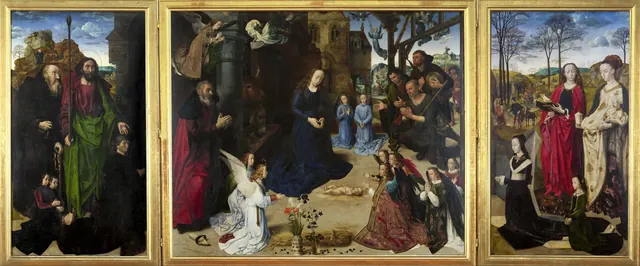
The Portinari Triptych was painted between 1473 and 1478 by Hugo van der Goes on commission from Tommaso di Folco Portinari, a Florentine banker. The work was begun in Bruges around 1475, linking a northern workshop with a southern patron and illustrating the vibrant artistic and financial exchange of the period. This partnership exemplifies the cross‑regional currents that defined the late fifteenth‑century art market, a fact that scholars continue to explore as a testament to the growing appetite of Florentine financiers for the refined visual language of the North.
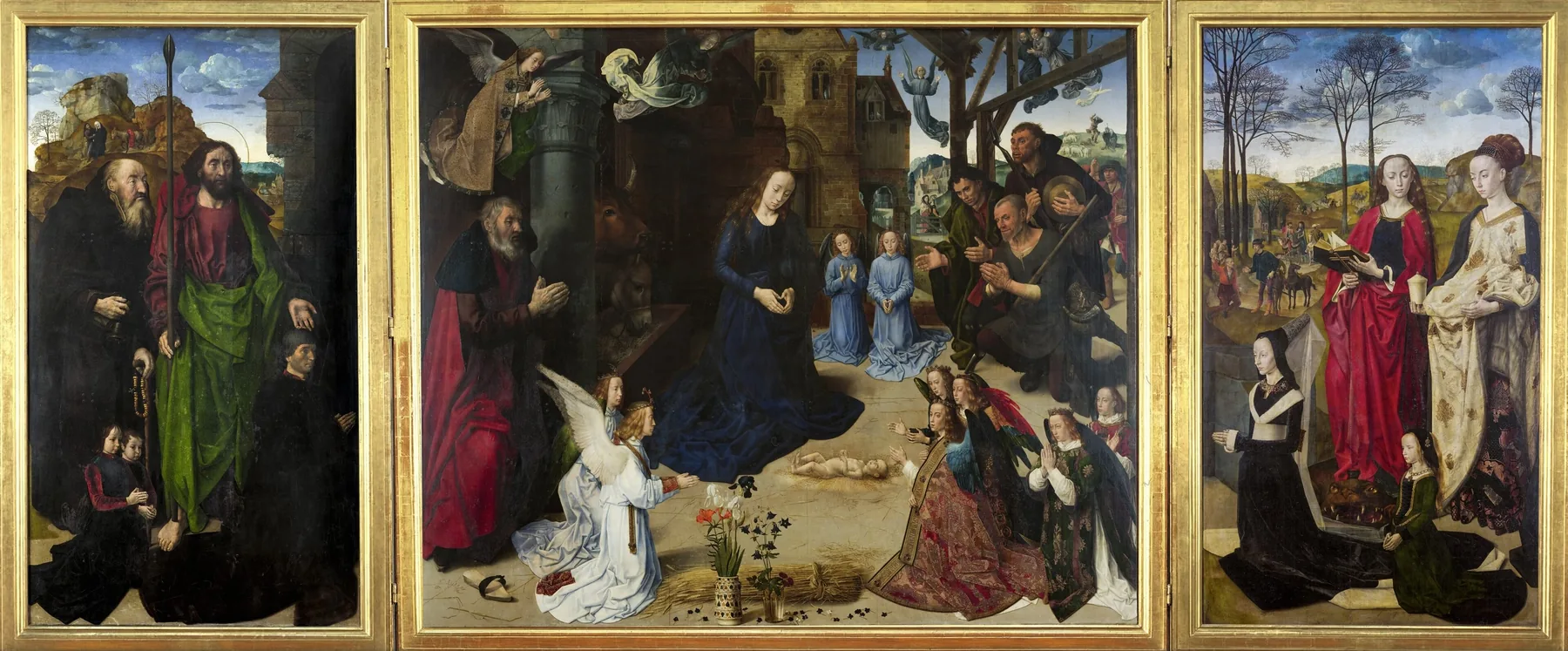
The resulting work takes the form of a traditional triptych, a three‑panel structure that invites the viewer into a layered narrative. At its heart lies a central panel that portrays the Adoration of the Shepherds, a scene of humble worship bathed in soft light. Flanking this core are two hinged doors; when closed they reveal the donors themselves, each accompanied by his or her patron saint. This compositional scheme creates a dialogue between the earthly and the divine, allowing the patrons to be seen alongside the holy story they support, while also offering a visual surprise when the doors are opened to reveal the vivid interior scene.
The central panel shows a grandiose Nativity scene with a naked Christ child illuminated by divine light, surrounded by shepherds, angels, the Virgin, and a kneeling St Joseph beside a column; it also includes a wooden hoof and a devil figure with a lion’s face. The luminous infant commands the viewer’s gaze, while the surrounding figures react with a mixture of awe and reverence, creating a theatrical space that draws the eye toward the source of the light. These striking details underscore van der Goes’s skill in rendering both the sacred and the uncanny within a single, cohesive tableau.
On the outer doors, the donors are presented with a quiet dignity, each accompanied by a saint who serves as an intercessor. The patron and his family appear alongside the saints, their faces rendered with careful attention, while the saints—identified by their traditional attributes—stand as protective guardians. This pairing underscores the medieval belief that personal devotion could be mediated through holy patrons, linking the earthly lineage of the commissioning family to the celestial realm. The placement of the donors on the doors, visible even when the triptych is closed, ensures that their presence is a constant part of the liturgical experience, reinforcing both their piety and their social standing.
The outer wings, when the triptych is shut, reveal an Annunciation rendered entirely in monochrome grisaille. This technique, employing varying shades of gray to mimic sculptural relief, creates the illusion of stone relief rather than painted surface. Van der Goes adopted this approach from Northern European masters such as Jan van Eyck and Hans Memling, whose works demonstrate a similar mastery of tonal modeling. By limiting the palette to a sculptural range, the artist invites a moment of contemplation before the vivid colors of the interior are revealed, turning the act of opening the doors into a visual and spiritual unveiling.
After Hugo van der Goes died in 1482, the triptych was sent to Florence with financial support from banker Niccolò di Giovanni Capponi, arriving on 28 May 1483 and being placed on the high altar of the church of Sant’Egidio, adjoining the Santa Maria Nuova hospital. Its prominent placement on a liturgical focal point meant that the work would be seen by worshippers and the sick alike, integrating its devotional imagery into the daily rhythms of prayer, healing, and communal gathering. The altar setting also emphasized the work’s role as a visual conduit for intercessory prayer, anchoring the Northern masterpiece within a Florentine sacred space.
Scholars have situated the Portinari Altarpiece within the devotional framework of the Devotio Moderna, a movement that emphasized personal piety and inner contemplation. Within this reading, the altarpiece functions not merely as an ornamental object but as a liturgical aid, guiding the faithful toward a more intimate encounter with the divine. The inclusion of the patron and his saints reinforces the commemorative aims of the commissioner, whose name becomes woven into the spiritual narrative. By aligning the work with the ideals of the Devotio Moderna, the painting reflects a broader cultural shift toward individualized devotion, while still serving the communal needs of the church that housed it.
Koster notes that a single contemporary account of Hugo van der Goes’s apparent mental illness has fueled his popularity in a modern world keen on the notion of a genius suffering for art. This narrative, though based on limited evidence, has amplified interest in van der Goes’s work, inviting viewers to read his meticulous detail and emotional intensity through the lens of personal turmoil. While the altarpiece itself contains no overt biographical symbols, the story of its creator’s alleged condition continues to color contemporary appreciation, reminding us how historical narratives can influence the way art is perceived today.
Through its intricate composition, its journey across Europe, and the layers of meaning scholars continue to explore, the Portinari Altarpiece remains a vivid testament to the power of art to bridge worlds and centuries. Its luminous interior, the solemn grisaille exterior, and the subtle interplay of patronage and devotion invite each viewer to step into a dialogue that spans time, geography, and faith.
Thank you for joining us on this journey through the Portinari Altarpiece—where history, devotion, and artistic mastery converge.