The story
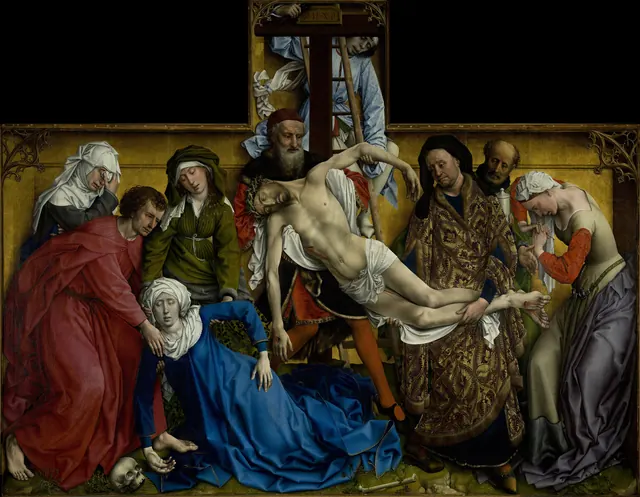
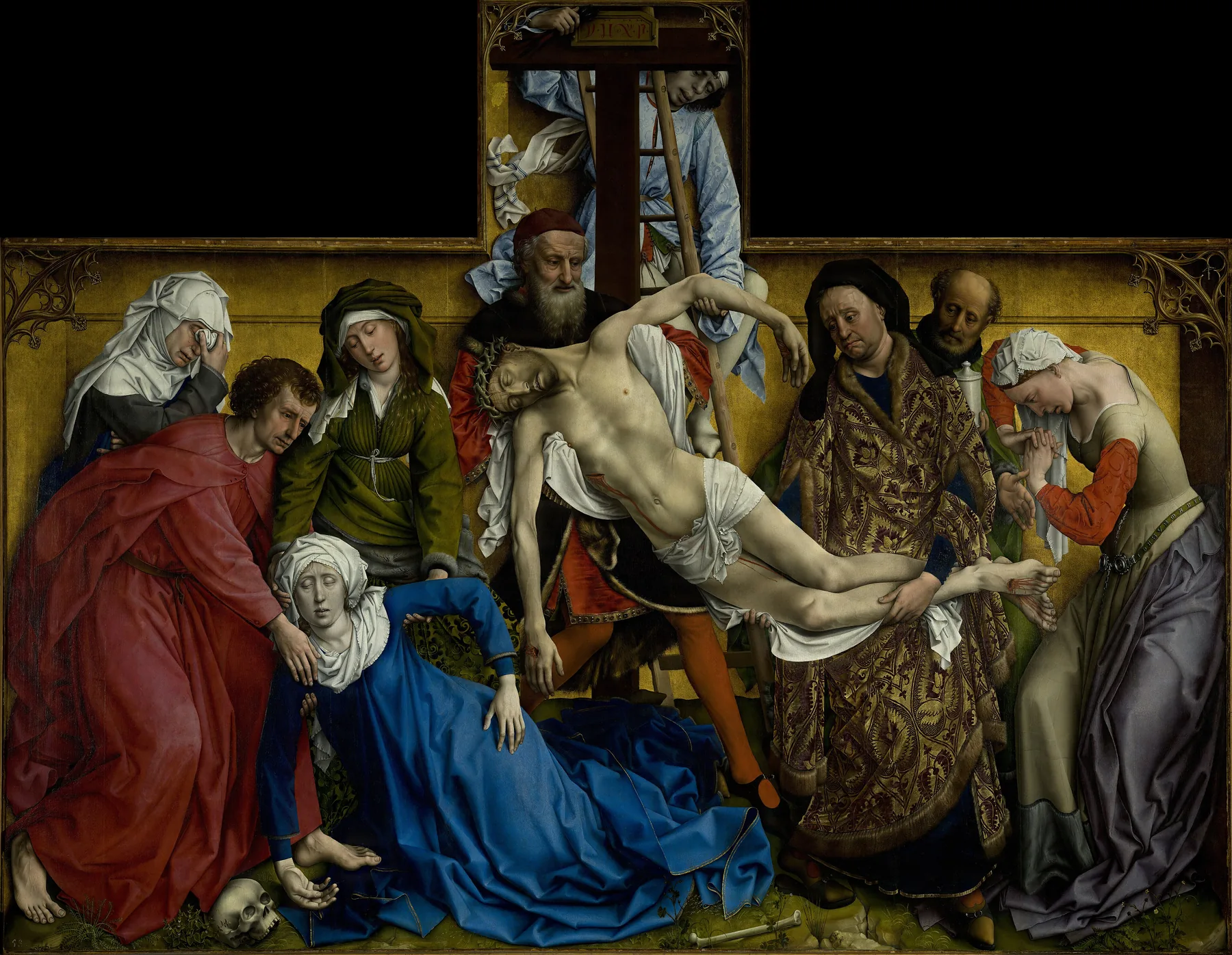
Imagine stepping into a chapel in mid‑15th‑century Leuven, where a solemn drama unfolds beneath a vaulted ceiling. Rogier van der Weyden painted this scene of the Descent from the Cross around 1435 to 1440, a period when the Northern Renaissance was still finding its voice. The work’s age places it at the height of van der Weyden’s mature style, allowing us to see how his mastery of emotion and form had already matured. Knowing the approximate date anchors the viewer in a moment when devotional art was both a communal prayer and a display of civic pride.
The composition draws the eye into an enclosed, box‑like space that feels both intimate and weighty. Van der Weyden frames the scene with low walls and a shallow depth, creating a stage where the figures occupy a tightly bounded arena. This architectural restraint heightens the emotional intensity, as every gesture is forced into close proximity. The viewer feels as if they are standing within the very walls of the chapel, witnessing the moment of Christ’s removal from the cross without the distraction of an expansive landscape.
At the heart of the tableau, Christ’s lifeless body is gently lowered by two mournful figures. On the left, Joseph of Arimathea steadies the fallen Savior, while on the right, Nicodemus—clad in sumptuous brocade—offers his support. The Virgin Mary, rendered in a deep blue mantle, swoons at the foot of St John, whose grief is palpable. Each figure is rendered with delicate modeling, their expressions and postures conveying a collective sorrow that transcends the scene, inviting the viewer to share in the palpable weight of loss.
The painting is an oil on panel measuring 220 × 262 cm. The oil medium allows a luminous surface and fine detail, while the panel provides a smooth, stable ground for the brushwork. Its considerable size gives the work a physical presence that would have dominated a chapel wall, yet still permitted viewers to approach closely enough to read the subtle modeling of flesh and fabric. This combination of material and scale reinforces its function as a focal devotional object, meant to draw the faithful into an intimate encounter with the sacred drama.
The painting’s original purpose was deeply rooted in civic identity. It was commissioned by the Archers’ or Great Crossbowmen’s Guild of Leuven for their own chapel, a testament to the guild’s wealth and piety. By placing such a powerful devotional image in their private space, the guild not only honored the sacred narrative but also affirmed its social standing within the city. This patronage explains the painting’s rich coloration and the careful attention given to the figures, reflecting the guild’s desire to present a work of high artistic quality.
After its life in Leuven, the masterpiece traveled northward, entering the Spanish royal collection in the 16th century. It was first acquired by Mary of Hungary, the sister of Emperor Charles V, and later passed to her nephew, King Philip II of Spain. This royal provenance not only ensured the painting’s preservation but also placed it within a network of elite collectors who valued Northern Renaissance art. Its presence in the Spanish court underscores the cross‑cultural appreciation of van der Weyden’s work during the height of the Habsburg empire.
Modern science has added another layer to our understanding. The first X‑ray of this Descent was taken by conservators who set up a makeshift darkroom in a bathroom of the Villanueva building to develop the images. Those radiographs reveal underdrawings and alterations hidden beneath the surface, offering clues about van der Weyden’s working process and any changes made during execution. This technical glimpse bridges the gap between the 15th‑century hand and 21st‑century eyes, showing how contemporary tools can illuminate the artist’s hidden decisions.
When we stand before the painting today, we are confronted with a blend of observed reality and artistic invention. The enclosed space, the careful arrangement of mourners, and the sumptuous fabrics are all meticulously rendered, yet the composition itself is a constructed narrative that guides our emotional response. One might read the tight grouping as an intentional device to focus attention on the act of descent, while the rich colors and textures serve to heighten the visual impact. This balance of observation and design invites viewers to contemplate both the historical event and the painter’s interpretive choices.
The choice of oil on panel was a relatively new development in the early 15th century, allowing van der Weyden to build up translucent glazes that give the flesh a lifelike glow. The panel, a sturdy wooden support, holds the paint without the flexing that canvas can introduce, preserving fine detail over centuries. At 220 × 262 cm, the surface offers ample room for the complex grouping of figures while still maintaining a cohesive visual field. This technical foundation underpins the painting’s ability to convey both monumental presence and intimate nuance.
By confining the scene within a box‑like architecture, van der Weyden eliminates any external landscape that might distract from the human drama. The low walls act like a theatrical proscenium, focusing attention on the central act of lowering Christ. This spatial compression also creates a sense of immediacy; the viewer feels drawn into the same limited volume as the mourners, sharing their proximity to the sacred body. The enclosure thus becomes a visual device that intensifies the emotional charge of the moment.
The figures’ attire and posture reinforce their roles. Nicodemus’s sumptuous brocade signals his wealth and the reverence afforded to the dead, while Joseph of Arimathea’s simpler garb underscores his humility. The Virgin’s blue mantle, a color traditionally associated with heavenly grace, contrasts with the earth tones of the surrounding mourners, highlighting her unique sorrow. St John’s steady presence at Christ’s feet anchors the composition, his gaze directed toward the body, inviting the viewer to contemplate the gravity of the scene.
X‑ray imaging, by penetrating the paint layers, reveals the artist’s hidden hand. In this case, the radiographs expose the initial sketches and later adjustments that van der Weyden made as he refined the composition. Such discoveries show that the painting was not a single, unaltered execution but a dynamic process of planning, correction, and artistic decision‑making. Understanding these layers deepens our appreciation of the work’s complexity and the meticulous care invested in its creation.
The Archers’ Guild of Leuven, a powerful civic organization, chose this biblical episode to adorn their chapel, linking their communal identity to the themes of sacrifice and redemption. By commissioning a work of such emotional depth, the guild demonstrated both piety and cultural ambition, positioning themselves as patrons of the finest contemporary art. This act of patronage reflects the broader trend of medieval guilds using religious imagery to cement their social standing and spiritual legitimacy.
The painting’s journey into the Spanish royal collection illustrates the high esteem in which Northern Renaissance art was held by the Habsburgs. Mary of Hungary’s acquisition signaled a personal taste for the emotive power of van der Weyden’s work, while Philip II’s inheritance ensured its continued protection within the royal holdings. This cross‑regional movement not only preserved the masterpiece but also introduced its visual language to a new audience, influencing the artistic tastes of the Spanish court.
Thank you for joining us as we uncovered the layers of meaning, material, and history woven into Rogier van der Weyden’s Descent from the Cross.