The story
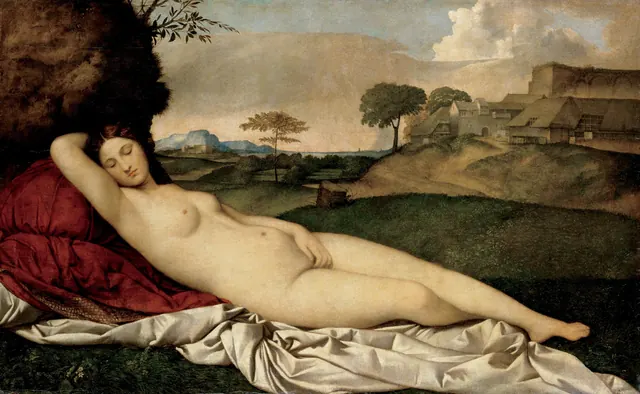
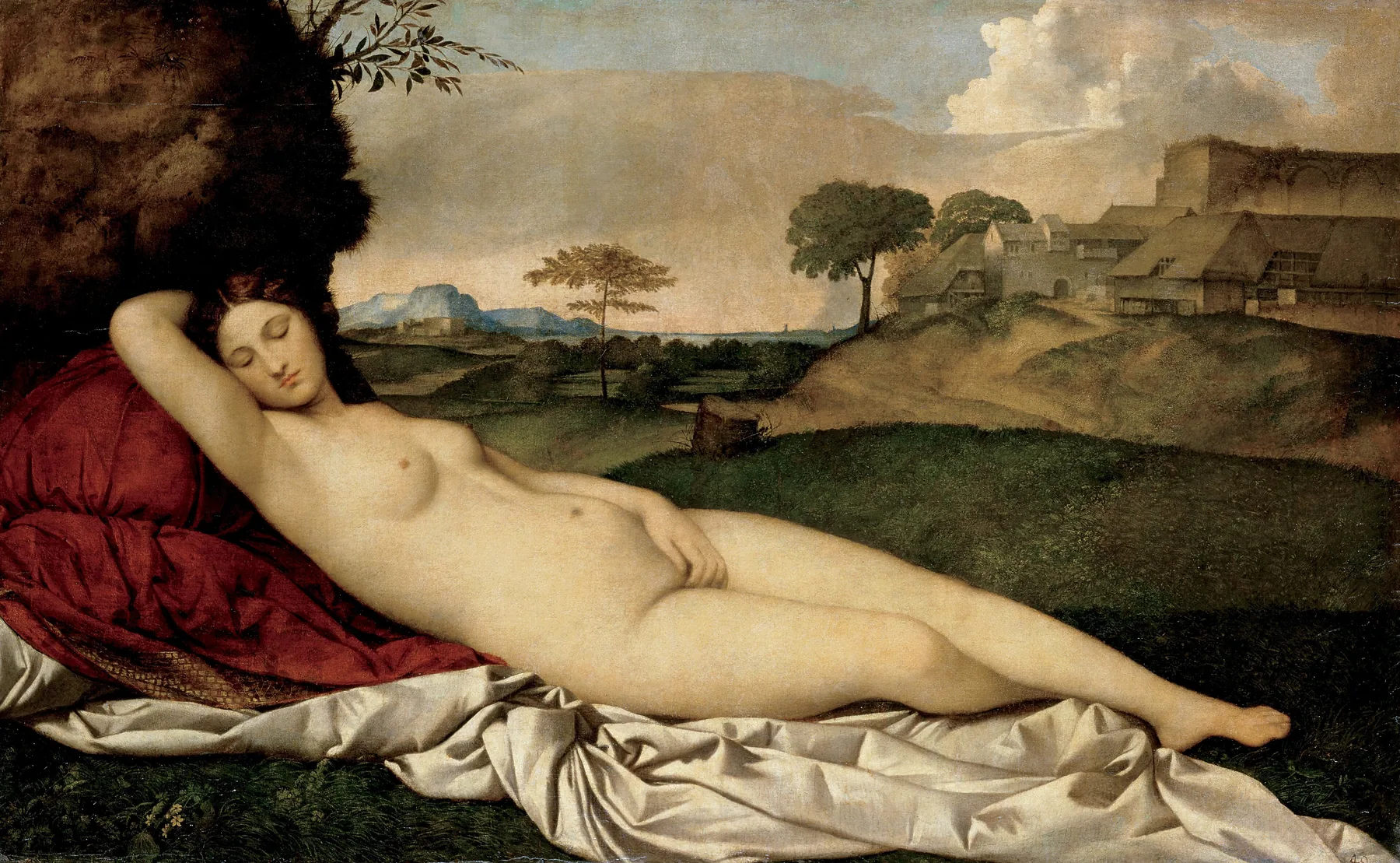
Imagine stepping into a quiet Venetian studio around 1510, where an anonymous figure reclines on a low, moss‑green cushion, bathed in soft, diffused light. That figure is the Sleeping Venus, an oil painting completed circa 1510 by the Italian Renaissance master Giorgione. Its origins lie in the early sixteenth‑century artistic ferment of Venice. The scene invites us to consider a moment frozen between dream and awakening, setting the stage for the visual and cultural conversations that follow. The story of the canvas does not end with Giorgione’s hand. Historical records tell us that he left the painting unfinished at his untimely death, and the sweeping landscape that stretches behind the sleeping figure was later completed by his younger contemporary, Titian. This collaborative finish is evident in the subtle shift of brushwork and the richer, more atmospheric handling of the hills and sky, hallmarks of Titian’s emerging style. By entrusting the background to Titian, the composition gains a depth that balances the intimate pose of Venus with a broader, almost lyrical view of the Venetian countryside, a balance that would influence generations of artists.
Giorgione’s rendition of Venus introduced what scholars now call the Venus pudica pose—a classical ideal where the nude covers her pubic region with a hand, simultaneously revealing and concealing her form. In this 1510 painting, the pose became a visual shorthand for modesty wrapped in sensuality, and it quickly spread across European art, appearing in countless copies, prints, and later masterpieces. By establishing this gesture as a standard, Giorgione not only provided a compositional solution for depicting the nude respectfully, but also set a precedent that shaped the language of erotic representation for centuries to come.
The delicate hand that rests on Venus’s thigh does more than shield; it points the viewer’s eye toward the hidden center while deliberately keeping it out of sight. Critics have argued that this dual action—both directing attention and denying full view—reduces the female subject to a focal point of sexuality, turning her body into an object of the gaze rather than a fully realized individual. This reading, grounded in contemporary analysis, invites us to question how the painting negotiates desire and decorum, using the modest gesture to both invite and restrain the spectator’s curiosity.
Beyond the reclining figure, the canvas opens onto a gentle Venetian landscape of rolling hills, softened by a hazy, luminous atmosphere that seems to breathe with the same calm as the sleeping goddess. The hills undulate in smooth, pastel tones, while distant trees and a faint horizon suggest a world that is both idealized and intimately familiar to a 16th‑century viewer. This setting, rendered in oil on canvas, captures the characteristic light of the lagoon, where the sky and water merge, creating a serene backdrop that amplifies the figure’s tranquil repose.
Notice how the sinuous curves of Venus’s body echo the rolling contours of the surrounding hills—a visual echo that unites figure and landscape into a single harmonious rhythm. The soft bend of her torso mirrors the gentle swell of a distant ridge, while the line of her arm follows the sweep of a clouded sky. This compositional mirroring reinforces the painting’s overall sense of unity, suggesting that the natural world and the human form are reflections of one another, a principle that would become a hallmark of Venetian painting in the decades that followed.
The Sleeping Venus has been celebrated for its expression of remote, unselfconscious beauty—a beauty that seems to exist beyond the concerns of the viewer, inviting contemplation rather than analysis. The figure’s idealized proportions, smooth flesh tones, and serene expression embody an aesthetic that prioritizes harmonious perfection over narrative drama. This idealization, coupled with the painting’s tranquil setting, creates a timeless vision of feminine grace that continues to captivate audiences, reinforcing the work’s reputation as a pinnacle of Renaissance sensuality rendered with restraint. Together, the painting’s pioneering pose and its celebrated beauty forged a new visual language that resonated throughout European art.
The Venus pudica gesture, first popularized here, offered a respectful yet alluring template for depicting the nude, while the work’s tranquil setting created a timeless vision of feminine grace that continues to captivate audiences, reinforcing the work’s reputation as a pinnacle of Renaissance sensuality rendered with restraint. In sum, the Sleeping Venus stands as a testament to a moment when artistic collaboration, compositional innovation, and cultural ideals converged. Giorgione’s initial vision, left incomplete at his death, was enriched by Titian’s atmospheric landscape, while the iconic pudica pose introduced a respectful yet provocative way to render the nude. The harmonious curves that bind figure to horizon, the hand that both reveals and conceals, and the serene, idealized beauty together create a work that continues to shape our understanding of Renaissance art and its enduring dialogue with desire, modesty, and nature.
The Sleeping Venus endures as a quiet invitation to contemplate timeless beauty.