The story
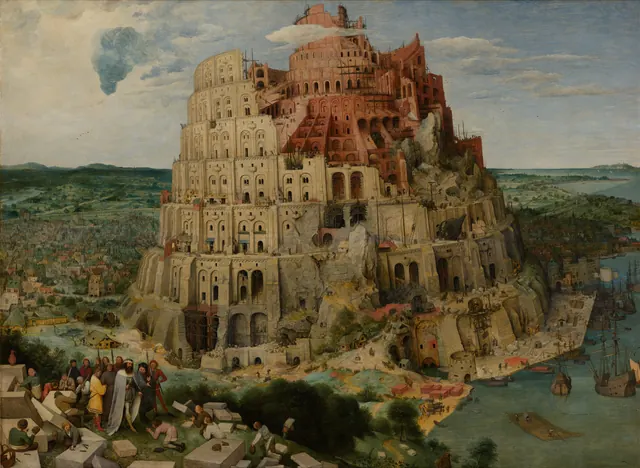
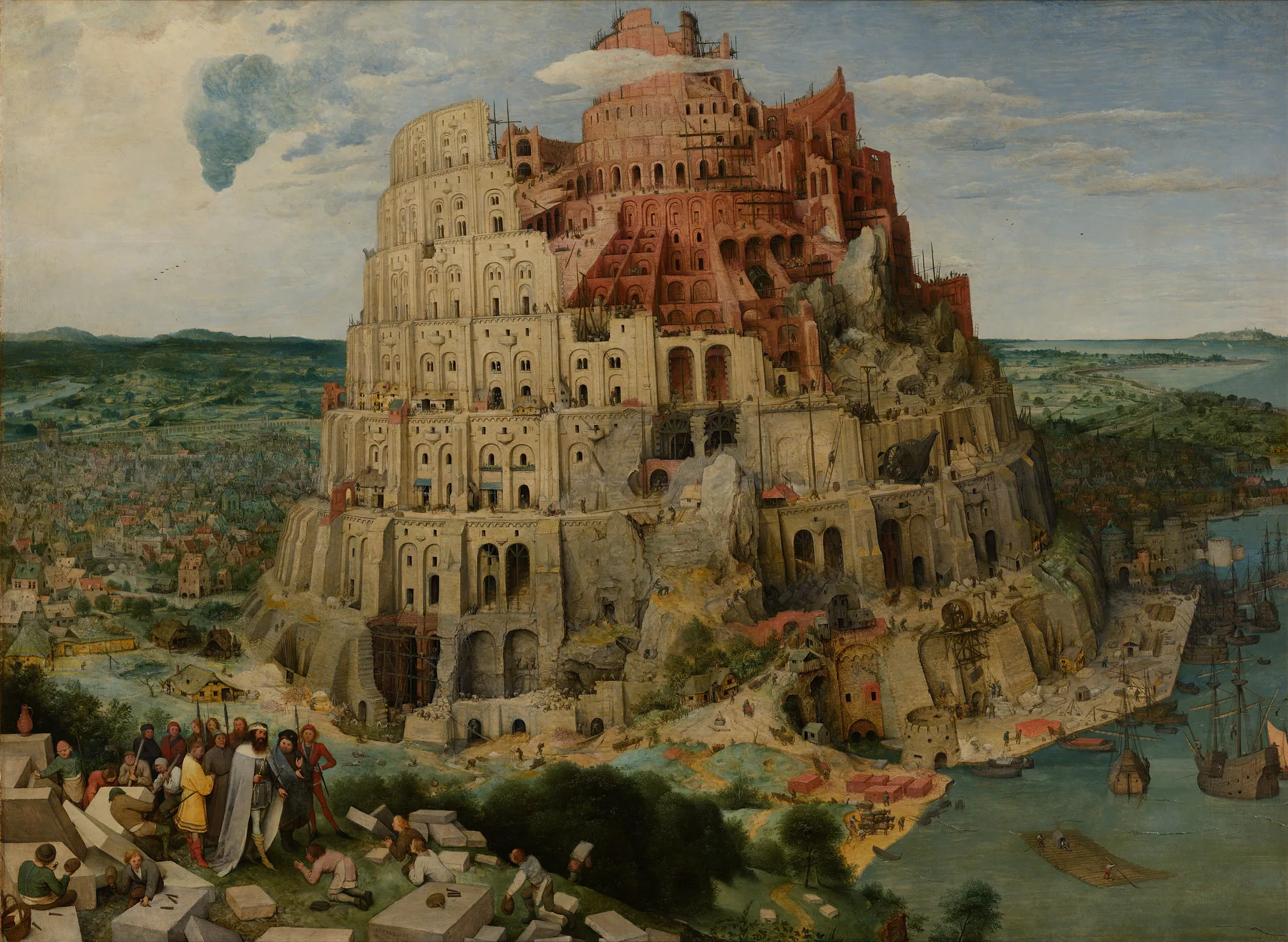
Imagine a bustling 16th‑century world frozen in paint, where a colossal tower stretches toward the heavens while dozens of figures toil at its base. This is Pieter Bruegel the Elder’s “The Tower of Babel,” painted in 1563. Bruegel, a master of Northern Renaissance observation, chose a biblical episode that had long fascinated artists, turning it into a vivid tableau of human industry and aspiration. The painting invites us to step into a scene where myth and daily life intertwine, offering a window into the artist’s keen eye for detail and his subtle commentary on collective ambition.
Bruegel executed this work in oil on oak panel, a medium prized by his Flemish contemporaries for its richness and durability. The panel measures 114 by 155 centimetres, giving the composition a commanding presence that draws the viewer’s gaze across its breadth. Today the painting resides in the Kunsthistorisches Museum in Vienna, Austria, where it continues to be displayed among the museum’s most celebrated holdings. These concrete details—date, material, size, and setting—anchor our visual experience, reminding us that we are looking at a tangible object crafted over four and a half centuries ago.
At the centre of the canvas rises the eponymous tower, a spiralling mass of brick and stone that seems to claw toward the sky. Bruegel renders its architecture with a blend of imagination and the Renaissance fascination for monumental construction, arranging the structure in tiered levels that recede into a hazy atmosphere. The sheer scale of the tower dominates the composition, its vertical thrust contrasting with the horizontal spread of the surrounding landscape. This visual tension underscores the biblical theme of human ambition reaching beyond earthly limits, while the tower’s unfinished state hints at the futility of such grand designs.
Encircling the base of the tower, a bustling crowd of laborers animates the scene. Bruegel populates the construction site with dozens of figures—men hauling timber, women carrying baskets, children watching the activity—each captured in a moment of effort or brief respite. Their gestures are rendered with a kinetic energy that conveys the collective toil required to raise such a structure. By distributing the human activity across the foreground, Bruegel emphasizes the communal nature of the enterprise, turning the biblical narrative into a vivid study of everyday industry and cooperation.
Beyond the tower’s immediate construction zone, Bruegel opens a panoramic view of a bustling city and countryside. Small houses with tiled roofs, market stalls brimming with goods, and winding streets populate the lower plane, rendered in muted earth tones that set them apart from the brighter construction area. In the distance, gentle hills rise under a sky washed in blues. This juxtaposition of orderly urban life with the chaotic ascent of the tower creates a visual dialogue between stability and aspiration, inviting the viewer to contemplate the balance between daily routine and grand ambition.
Bruegel’s compositional strategy guides the eye from the foreground’s detailed figures upward along the tower’s spiralling ascent, then outward to the expansive landscape. The tower’s central placement anchors the scene, while surrounding activity frames it on both sides, creating depth through overlapping planes. Atmospheric perspective—lighter, cooler tones in the distant hills—enhances the illusion of space, drawing the viewer’s gaze beyond the immediate drama. This orchestration of scale, color, and line organizes the bustling narrative and reinforces the thematic tension between human endeavor and the vast world that surrounds it.
The story behind the painting comes from the Genesis account where humanity, speaking one language, decides to build a tower reaching the heavens—a project stopped by divine intervention that confuses their speech. Bruegel does not show the moment of punishment; instead, he freezes the scene in the midst of human effort, emphasizing collective ambition rather than its downfall. By focusing on the crowd and the towering structure, he invites contemplation of the line between collaborative achievement and hubristic overreach. This reading aligns with the painting’s title and its visual emphasis on the scale of human enterprise.
Standing before Bruegel’s “The Tower of Babel,” we are drawn into a world where stone, sweat, and sky converge, prompting questions that echo across centuries. The painting’s meticulous detail, grand composition, and timeless theme of aspiration continue to resonate, reminding us that the drive to reach higher—whether through architecture, art, or ideas—remains a defining human impulse. As we step back from the panel, the unfinished tower lingers in the imagination, a testament to both the power and the limits of collective ambition. Its enduring presence in Vienna invites each generation to revisit the ancient question of how far humanity can climb.
Thank you for joining us on this close examination of Bruegel’s masterful vision of ambition.