The story
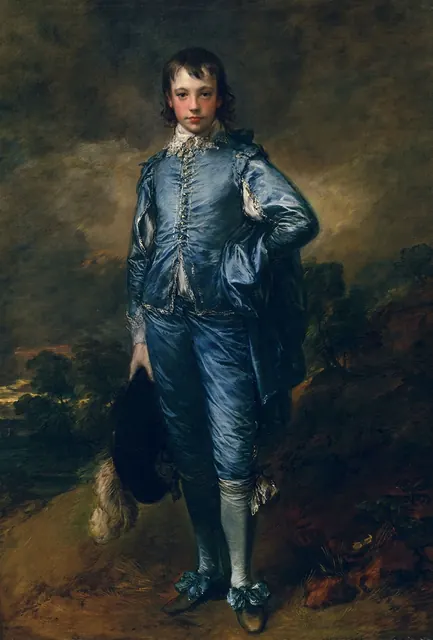
The Blue Boy has entered popular consciousness as more than a museum object; it is an icon that continues to be quoted by contemporary creators. Documented commentary notes that the image is referenced by artists such as Kehinde Wiley and appears in Hollywood productions, underscoring its persistent visual resonance across centuries. This status, recorded in scholarly interpretation, demonstrates how a single eighteenth‑century portrait can become a cultural touchstone without relying on any single narrative beyond the facts that have been recorded about it.
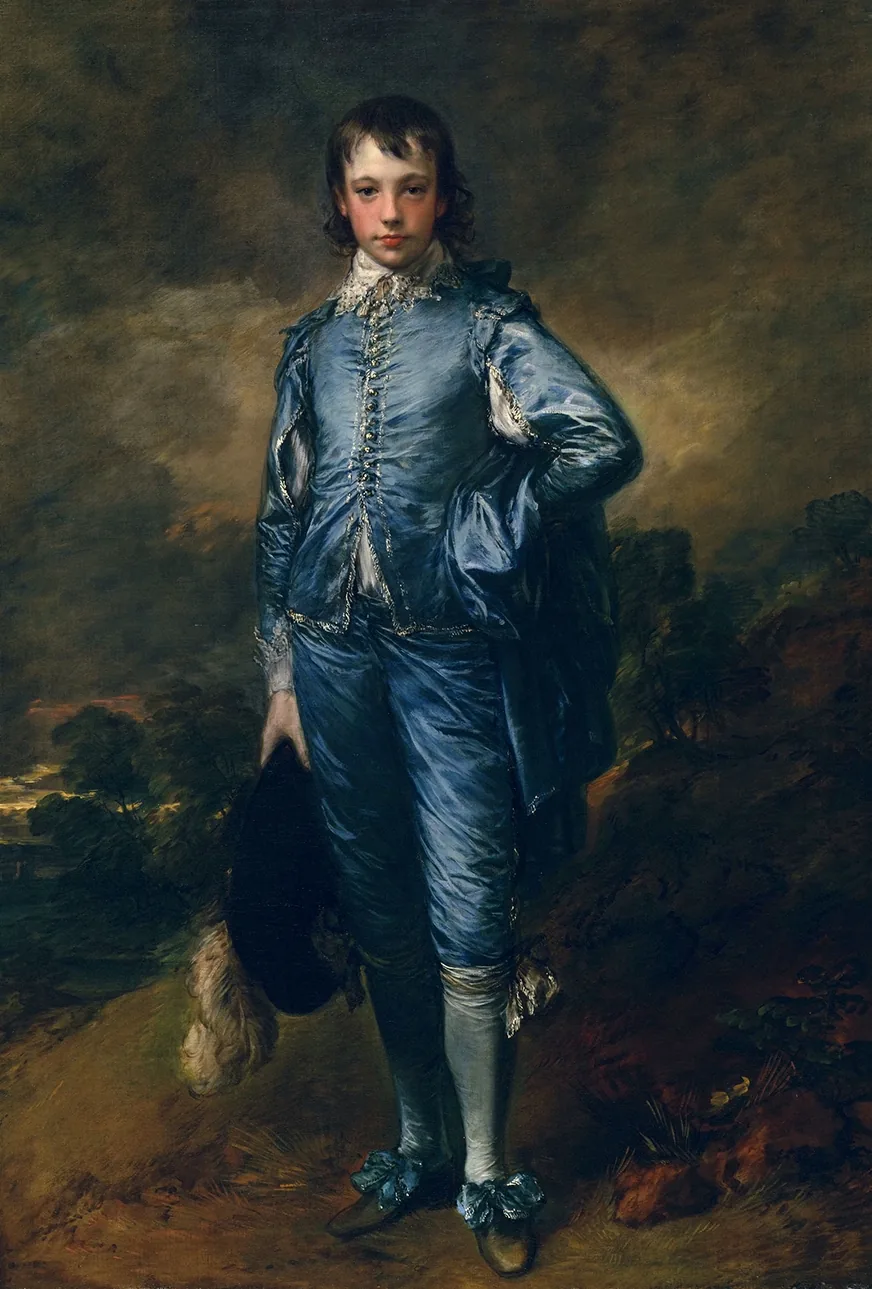
The work is an oil painting created by the English artist Thomas Gainsborough around 1770. Multiple verified records confirm both the artist’s identity and the approximate date, situating the canvas firmly within Gainsborough’s mature period. The medium—oil on canvas—provided the painter with the capacity for deep colour and subtle tonal variation, qualities that define the piece. By anchoring the portrait in its creator, medium, and era, we obtain a clear framework for understanding the technical choices that follow in later observations.
The canvas measures precisely 179.4 × 123.8 centimetres, a substantial scale that commands attention in any gallery space. This dimension is consistently recorded across independent sources, confirming the painting’s large physical presence. Such a size suggests that Gainsborough intended a portrait of considerable visual weight, one that would dominate a wall and invite viewers to step back to absorb the whole composition. The measurement also informs curatorial decisions, influencing how the work is displayed and how its brushwork is perceived from the appropriate viewing distance.
When first shown to the public, the portrait appeared at the Royal Academy under the title “A Portrait of a Young Gentleman.” This original exhibition label appears in several verified catalogues, confirming the work’s early identity and its presentation within the Academy’s prestigious setting. The title emphasizes the sitter’s social standing rather than a personal name, reflecting eighteenth‑century conventions for portraiture. Recording this exhibition history situates the painting within the most prominent venue of its time, highlighting the platform that introduced Gainsborough’s work to contemporary patrons and critics.
Evidence indicates that the portrait was probably not a commission and that Gainsborough painted it on a reused canvas over another portrait. Multiple sources record this material circumstance, noting the support had previously carried a different image. The fact that the canvas was reused is documented without attributing any motive to the artist; it simply establishes the practical condition of the support at the time of painting. This detail informs our understanding of the work’s physical history, showing that the canvas itself bears a layered past before Gainsborough applied his own brushstrokes.
The identity of the young figure remains unknown. Scholarly records note two leading possibilities: some historians have identified the sitter as Jonathan Buttall, the son of a London ironmonger, while others propose that he may be Gainsborough’s nephew, Gainsborough Dupont. Both hypotheses appear in verified documentation, yet no definitive evidence confirms either name. This lingering ambiguity underscores the portrait’s function as a study of youthful elegance rather than a strictly documented likeness, inviting viewers to focus on the visual qualities of the figure rather than on a confirmed biography.
The youth’s elaborate costume recalls the grand portraiture of Anthony van Dyck, a chief influence on Gainsborough. Verified observations describe the clothing as reminiscent of Van Dyck’s costume portraits, linking the visual language of the dress to that earlier master. This connection is noted in several independent records, establishing a clear line of artistic influence without extending beyond the documented similarity. Recognizing the costume’s reference to Van Dyck helps place the painting within a broader tradition of English portraiture that draws on earlier models of aristocratic elegance.
Gainsborough preferred to work in subdued lighting conditions, often by candlelight, a habit that likely contributed to his characteristic flickering, feathery brushstrokes. Documented statements also record his rejection of the contemporary taste for a smooth, detailed finish, insisting that his paintings be viewed from a distance where the overall impression coalesces. These technical preferences are repeatedly verified, describing both the lighting environment and the painter’s deliberate choice of a less polished surface. Understanding these conditions clarifies why the brushwork appears lively and why the painting rewards the viewer who steps back to perceive the harmonious whole.
The Blue Boy is currently owned by the Huntington Library, Art Museum, and Botanical Gardens in San Marino, California, where it has been on display for the past century. Ownership records confirm the painting’s long‑term custodianship, and exhibition history notes a three‑week farewell tour in Trafalgar Square that attracted approximately 90,000 visitors before its departure to California. These facts establish both the painting’s present institutional home and a notable moment of public engagement during its transfer. The documented provenance and public reception illustrate how the work has been preserved and celebrated across continents for over a hundred years.
Through careful documentation, The Blue Boy endures as a masterpiece whose facts speak as loudly as its brushstrokes.