The story
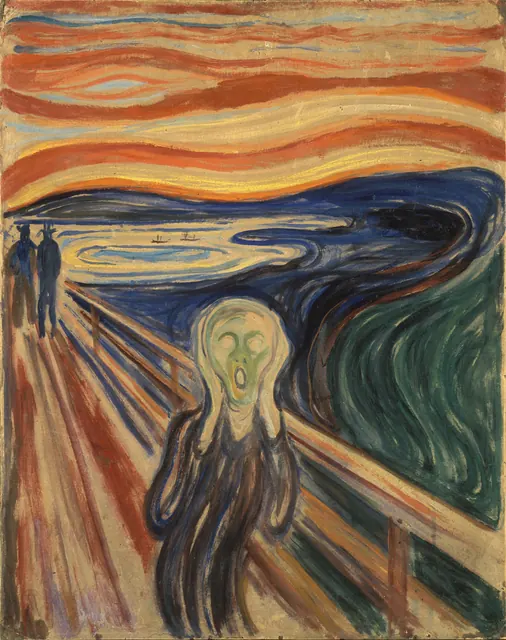
When Edvard Munch turned his iconic vision into a lithograph in 1895, he gave the world a paper‑borne echo of an image that had already haunted him two years earlier. The earlier 1893 paintings, which Munch later described as expressions of personal and universal anguish, already established the unsettling figure that would dominate the print. By transferring that same anguished pose onto a printable stone, Munch ensured that the scream could travel far beyond a single canvas, reaching viewers in galleries and homes alike. This capacity for wide circulation, combined with the raw emotional charge first captured in 1893, makes the 1895 lithograph a pivotal bridge between private torment and public art.
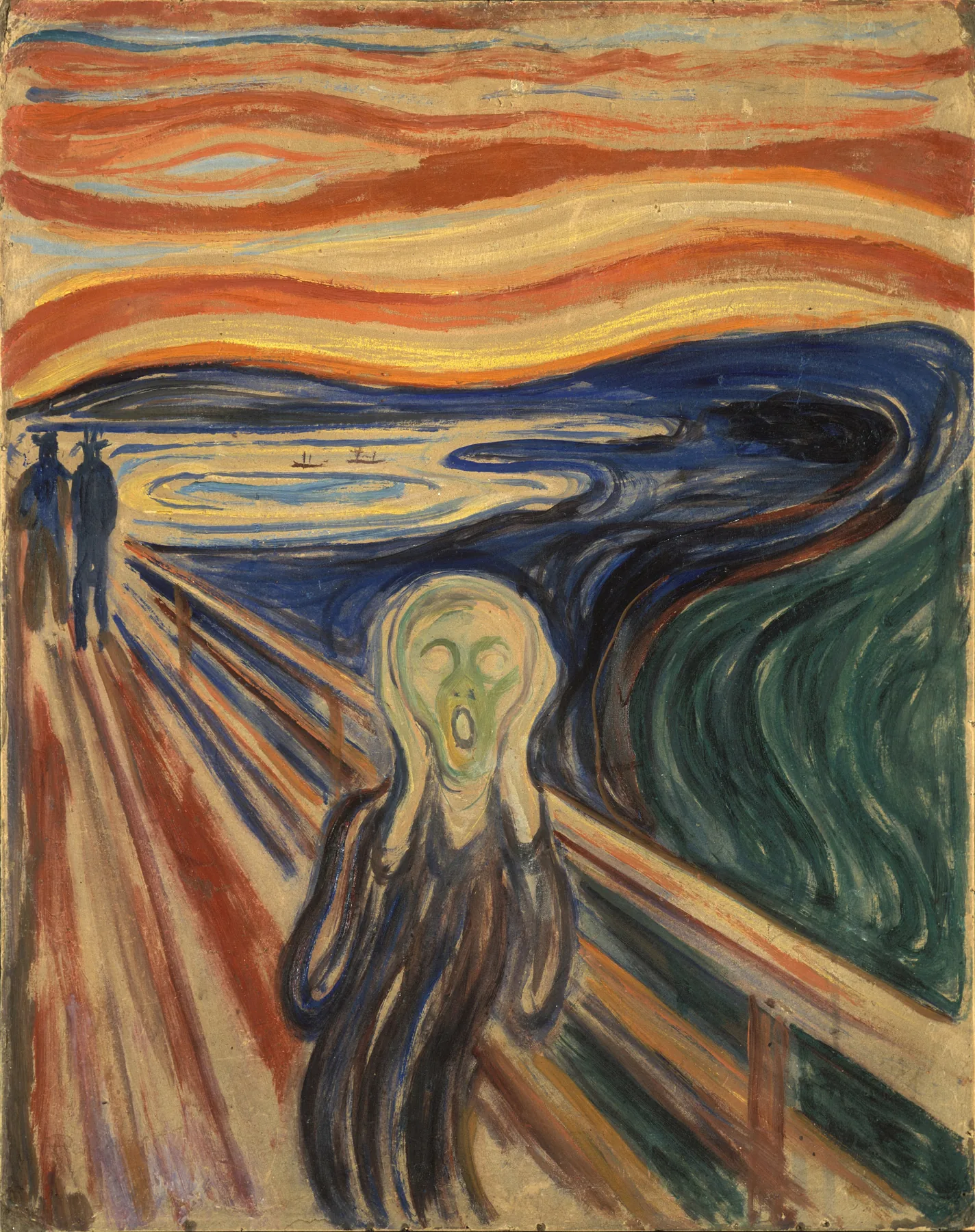
Munch’s creative surge in the autumn of 1893 produced two painted versions of the scream, each a study in stark, trembling emotion. He later reflected that these works conveyed both his own inner turmoil and a broader, shared sense of dread. Though the lithograph would not appear until two years later, those 1893 canvases laid the conceptual groundwork, establishing the figure, the bridge, and the sky that would become the print’s signature elements. Understanding this chronology reminds us that the lithograph is not an isolated invention but a continuation of a visual investigation begun in 1893.
The printed image itself is stark and immediate: a hairless figure stands on a bridge, its form contorted in a silent cry, while the sky arches overhead. The figure’s lack of clothing strips away any narrative disguise, leaving pure emotion exposed. The bridge, rendered with simple, sweeping lines, anchors the scene, and the sky above, rendered in broad strokes, presses down on the figure, creating a sense of pressure that seems to emanate from the surrounding atmosphere itself. This visual economy—figure, bridge, sky—conveys a powerful, universal feeling without the need for elaborate detail.
Munch’s technical mastery shines through the lithographic process. He inked the stone in reverse, a deliberate act that ensured the final print would mirror the composition of his original painting exactly. Roughly thirty impressions were pulled, each offering a chance to experiment: some were printed on colored paper, others received delicate watercolor hand‑coloring, and a number omitted the handwritten German title and accompanying phrase entirely. The title “Geschrei” and the line “Ich fühlte das grosse Geschrei durch die Natur” appear in Munch’s own hand beneath the figure, directly quoting his autobiographical text about a walk near his hometown. These textual elements bind the visual outcry to a personal narrative, turning the print into both image and document.
The Metropolitan Museum of Art’s impression entered its collection through the generous bequest of collector Scofield Thayer in 1982, recorded under accession number 1984.1203.1. This particular sheet measures 35.7 × 23.6 cm for the image and 51.4 × 39.7 cm for the overall sheet, dimensions confirmed by the museum’s records. In the lower left corner, Munch signed the work in graphite as “E Munch,” while the stone‑carved inscription reads “Geschrei.” These marks not only authenticate the impression but also reveal the artist’s meticulous attention to both visual and textual detail, anchoring the work within a specific material and historical context.
Across the Atlantic, the Art Institute of Chicago holds another impression printed in black ink on cream‑colored card. Its image size is 355 × 253 mm, with a sheet measuring 510 × 385 mm. These measurements differ from the Met’s centimeter dimensions, reflecting a distinct production batch and substrate choice. The deep black lines against the warm, off‑white background create a subtle shift in visual character, demonstrating how the same composition can acquire a new atmospheric tone simply through material variation.
Interpretively, scholars at Encyclopaedia Britannica read the lithograph as a visual embodiment of anxiety and existential dread. They note how undulating lines press upon the central figure like shock waves, turning the surrounding landscape into an active participant in the figure’s turmoil. Another Britannica entry expands this reading, suggesting the work also conveys feelings of loneliness, jealousy, love, despair, and grief. These layered interpretations invite viewers to hear not just a single scream, but a chorus of modern anxieties rendered in line and ink.
The handwritten German title and the quoted phrase on the lithograph do more than label the image; they tether it to Munch’s own autobiographical voice, offering a documentary hook that links the visual scream to a lived experience. This convergence of text and image underscores why the print continues to reverberate across generations, its silent cry amplified by the very words that inspired it. As we stand before the paper, we hear not only Munch’s personal outcry but also the echo of a universal human condition that still resonates today.
The Scream’s lithograph remains a testament to how a single, ink‑stained sheet can capture the timeless pulse of human anxiety.