The story
Introduction – Early Acclaim
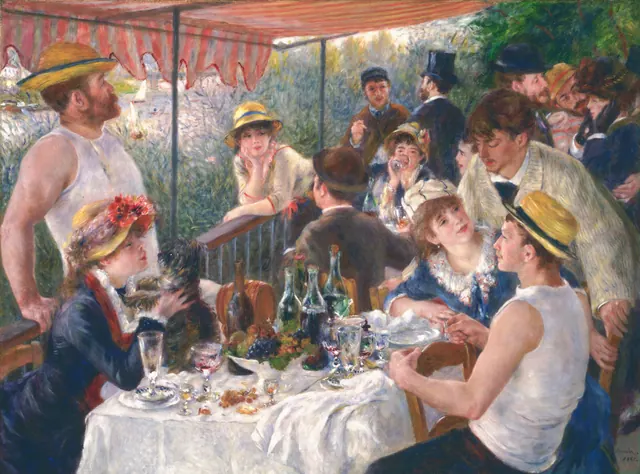
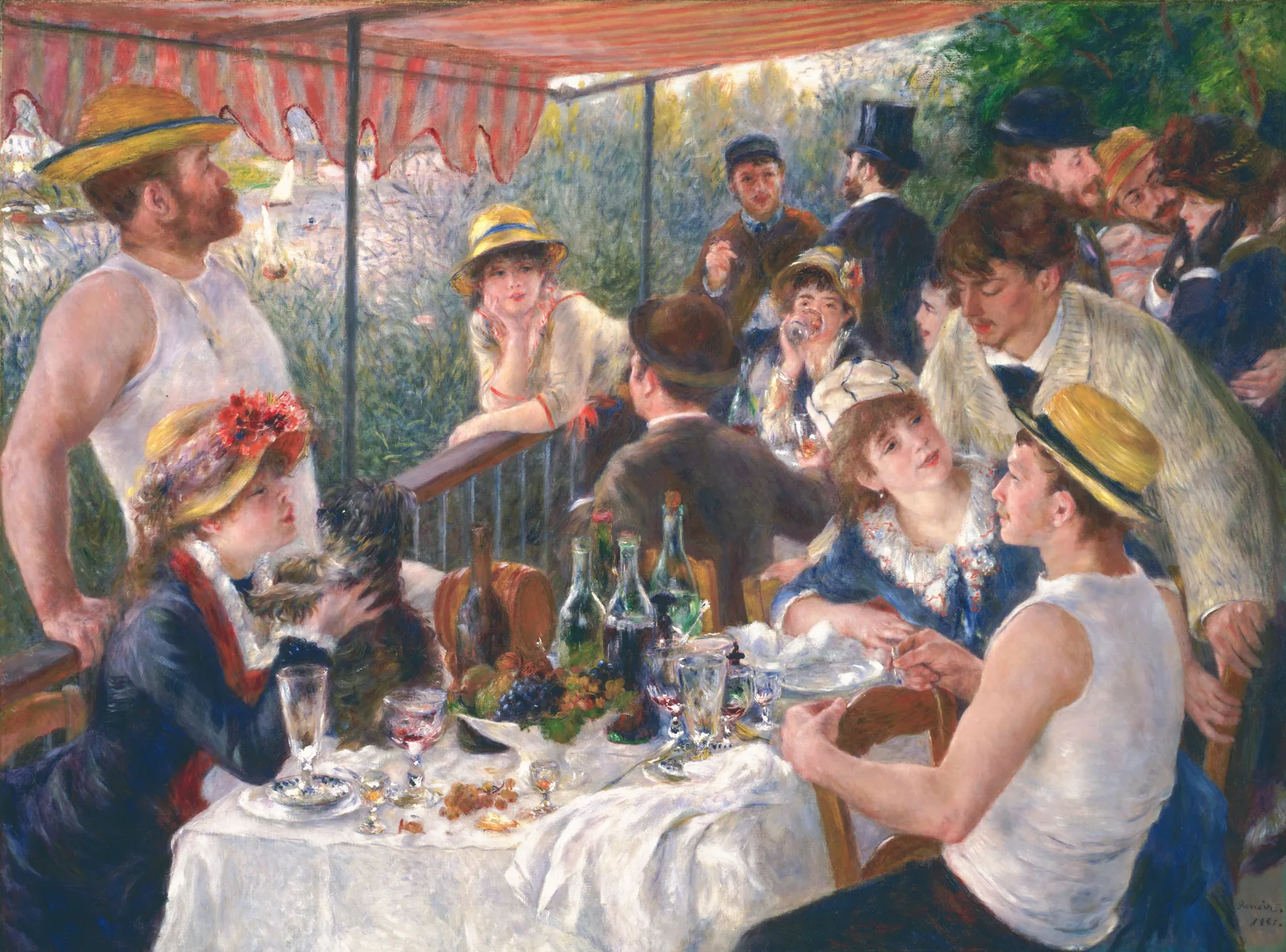
When it first entered the public eye, Renoir's Luncheon of the Boating Party was celebrated as one of the most famous French paintings of modern times. The acclaim arrived at its debut exhibition, where critics and visitors alike recognized its immediate impact. This early recognition sets the stage for our exploration, highlighting the work's capacity to capture attention from the moment it was displayed. By foregrounding this reception, we anchor our narrative in the painting's documented reputation, inviting viewers to consider why such a work commanded such praise without yet delving into its creation.
Duncan Phillips, the founder of the museum that would house the canvas, expressed a clear expectation that the painting would draw substantial public interest and bolster support for the institution. He described it as one of the greatest paintings in the world, a statement that underscores the high esteem in which the work was held by contemporary collectors. This perspective provides insight into the painting's perceived cultural weight at the time, framing it as a catalyst for audience engagement and institutional ambition. By noting Phillips's confidence, we see how the artwork was positioned as both artistic triumph and public magnet.
Creation Process – Technique on Canvas
Renoir approached the composition without the aid of preparatory sketches, opting instead to develop the scene directly upon the canvas. As he worked, he made adjustments, allowing the picture to evolve organically with each brushstroke. This method reveals a fluid, responsive process, where decisions were made in situ rather than pre‑planned on paper. Understanding that the artist built the work in real time helps us appreciate the spontaneity embedded in the final image, and it explains why certain elements may appear more gestural, reflecting a hands‑on, iterative approach to composition.
The physical surface of the canvas bears evidence of Renoir's iterative technique. Small drying cracks are visible where he painted over a layer that had not yet fully set, indicating that he returned to the same area before the underlying paint had dried. These fissures serve as a tangible record of reworking, showing that the artist was willing to modify sections even as the work progressed. Recognizing these marks allows us to trace the painting's layered construction, confirming that the final composition emerged from a series of adjustments rather than a single, uninterrupted execution.
Working Circumstances – Studio Realities
In correspondence with his friend Paul Berard, Renoir disclosed that the completion of the painting faced delays, noting specifically that the model known as Deudon had not yet arrived. This letter provides a glimpse into the logistical challenges that accompanied the project, revealing that the presence of a particular figure depended on the model's availability. Such a detail emphasizes that the work's timeline was influenced by practical considerations, and it reminds us that the artist's vision was sometimes contingent upon external factors beyond his immediate control. Such logistical hurdles were common in large studio projects of the era, adding further complexity to the painting's timeline.
Interpretations – Scholarly Perspectives
Art historian Marjorie Phillips offered a distinct reading of the canvas, describing it as not merely anecdotal but monumental in scope. She suggested that, when viewed across time, the figures within the scene come to represent every man, all people. This interpretation frames the gathering not as a fleeting social moment but as an enduring, universal tableau. By emphasizing the work's capacity to embody a collective human experience, Phillips invites viewers to see beyond the specific setting and consider the broader resonance that the composition may hold. This reading invites viewers to contemplate the painting as a timeless reflection of humanity.
Klaus Ottmann, reflecting on the painting's place within the collection, called it a cornerstone that continues to provoke strong responses from viewers. His assessment highlights the work's lasting ability to engage audiences, suggesting that its impact endures across generations. By labeling it a foundational piece, Ottmann underscores its significance within the museum's holdings and its role in shaping the institution's identity. This perspective reinforces the notion that the painting remains a dynamic, emotionally resonant presence, inviting ongoing dialogue and reaction. Visitors often pause, reflecting on the interplay of light and social interaction, a testament to its ongoing relevance.
Reception and Legacy – From Exhibition to Ongoing Impact
Bringing together the various strands of evidence, we see a work that was hailed at its debut as a landmark of modern French art, praised by collectors like Duncan Phillips for its capacity to attract public interest, and later interpreted by scholars as both monumental and emotionally potent. Marjorie Phillips's view of the figures as representing every person aligns with Klaus Ottmann's observation of the painting's enduring power to elicit strong responses. Together, these assessments illustrate how the canvas has been celebrated both for its immediate acclaim and its lasting ability to speak to universal themes, confirming its status as a pivotal piece in the museum's narrative.
The painting's early exhibition history further cements its reputation. In December 1923, it was displayed alongside Alfred Sisley's Snow at Louveciennes and Banks of the Seine at the Phillips Memorial Gallery, positioning it within a distinguished group of modern works. This placement not only reinforced its standing among contemporaries but also contributed to the broader public's exposure to Impressionist achievements. By sharing the gallery space with other notable pieces, the canvas benefited from comparative visibility, enhancing its profile as a celebrated example of French modern painting.
Through these documented moments, we glimpse how Renoir’s canvas continues to captivate, inviting each new viewer to join the conversation that began over a century ago.