The story
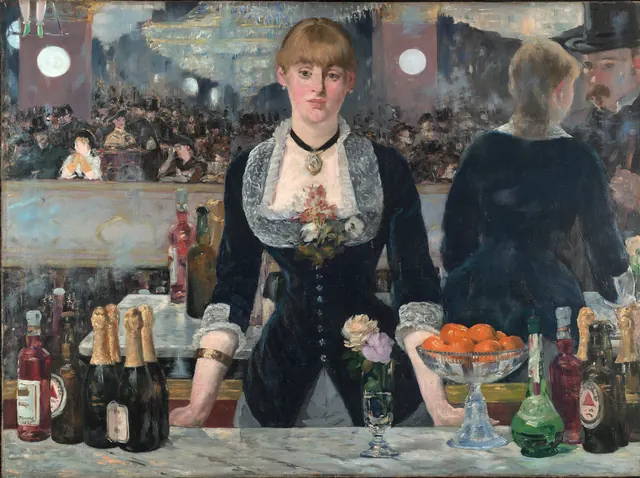
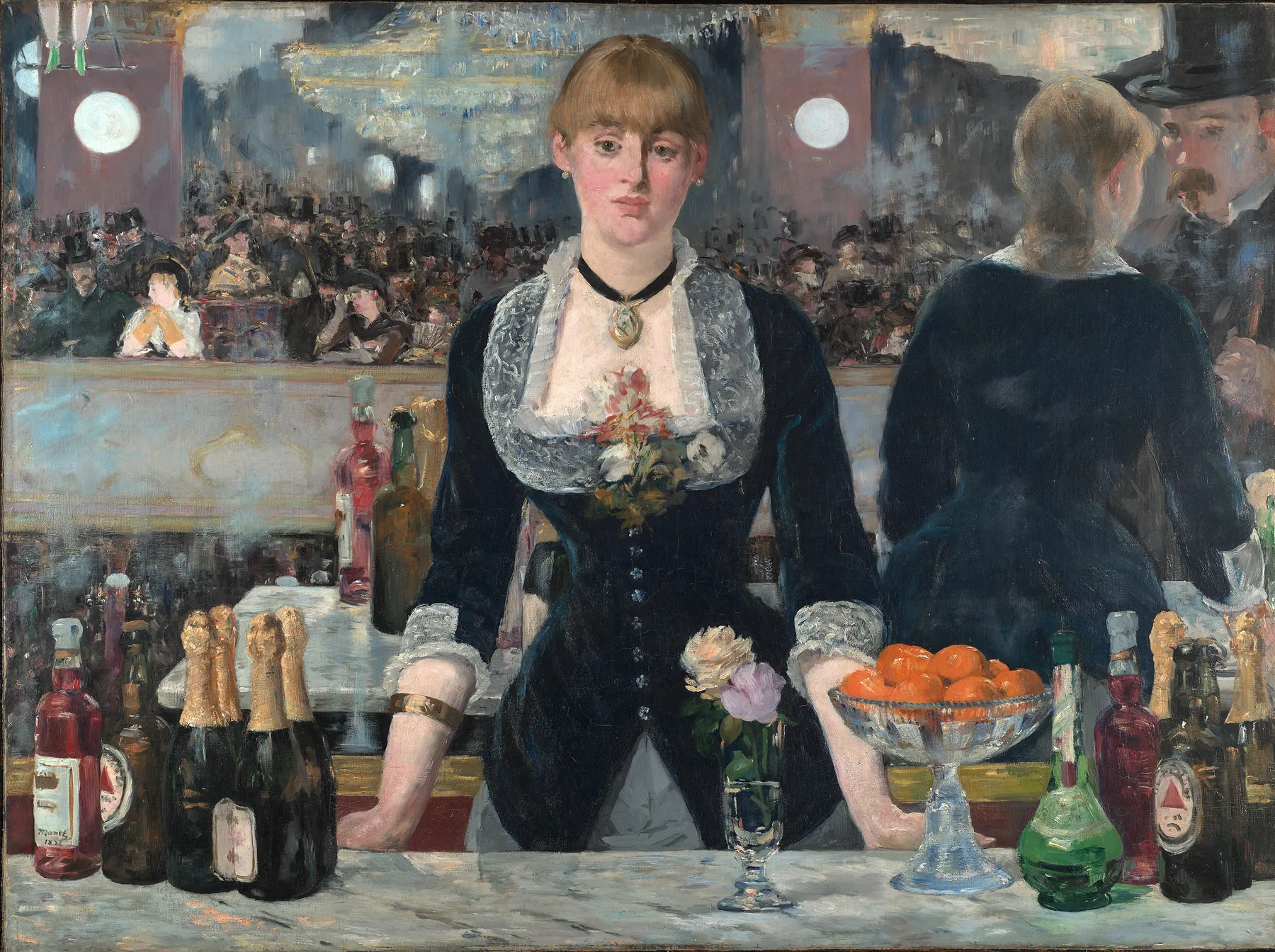
Édouard Manet’s canvas titled “A Bar at the Folies‑Bergère” bears the date 1882. That same year Manet presented the painting at the Paris Salon, a prestigious public exhibition, just a year before his death. The Salon showing placed the work at the centre of the French art world, offering contemporary viewers a fresh glimpse of Manet’s mature style. By anchoring the piece in a specific year and venue, we gain a clear temporal framework that grounds all subsequent discussion of its visual and cultural impact. The painting’s creation and immediate public exposure therefore become the starting point for understanding its lasting resonance.
Today the canvas travels far from its original Parisian setting, arriving on loan from the Courtauld Institute of Art Gallery in London. The loan arrangement allows the painting to be displayed in a different institutional context, inviting new audiences to encounter Manet’s work outside the museum where it was first studied. This movement across borders highlights the painting’s continued relevance and the collaborative nature of art stewardship, where institutions share masterpieces to broaden public access. The Courtauld’s role as lender underscores the work’s status as a valued object within the international museum network, ensuring that viewers far from Paris can still experience its visual power.
The Folies‑Bergère was an elaborate Parisian variety‑show venue, offering entertainment ranging from ballets to circus acts. Contemporary observers often assumed that the barmaids who served the bustling crowd were available as clandestine prostitutes, a perception that infused the establishment with a layer of moral ambiguity. This social reading informs our understanding of the figure at the bar, suggesting that her presence carried connotations beyond mere service. By recognizing the contemporary assumptions about the barmaids, we see how the painting engages with the complex interplay of entertainment, commerce, and hidden vice that characterised the nightlife of late‑nineteenth‑century Paris. The venue’s reputation therefore frames the barmaid’s role within a broader cultural context.
At the heart of the canvas a barmaid stands facing the viewer, her gaze meeting ours directly. Behind her, a large mirror reflects the bustling hall and its patrons, yet the reflected scene does not align perfectly with the barmaid’s position, producing visual inconsistencies that challenge the viewer’s expectations of coherent perspective. The composition shows the barmaid looking directly at the viewer while the mirror behind her reflects the hall and its patrons, creating those inconsistencies. This juxtaposition of a straightforward stare and a discordant mirror image creates a tension between reality and representation, foregrounding the act of looking itself and inviting us to question what is being shown versus what is being reflected.
Manet seems to have painted the image from a viewpoint directly opposite the barmaid, a perspective that is contradicted by the displaced reflections of objects and figures in the mirror. This contradiction means the work does not offer a single, determinate viewing position, leaving the overall spatial logic ambiguous. By painting from an opposite stance yet allowing the reflected hall to shift, Manet deliberately avoids fixing the scene in a single coherent space. The resulting ambiguity forces the viewer to navigate an uncertain visual field, where the relationship between the painted figure and its reflected surroundings remains unresolved. This spatial puzzling becomes a central feature of the painting’s visual strategy.
Curator Scott Allan discusses the visual inconsistencies that arise within the painting’s mirrored space. He draws attention to the way the reflected hall and the barmaid’s placement seem to diverge, prompting viewers to reconsider the reliability of the painted environment. Allan’s observations highlight how the tension between the direct gaze and the mirrored scene creates a dialogue between the viewer and the painted world, a dialogue that remains unsettled. By emphasizing these discrepancies, the curator underscores the painting’s capacity to generate ongoing discussion about perspective and representation, reminding us that the work continues to function as a catalyst for scholarly debate and visual curiosity.
Art historian John House interprets the devices of looking within the painting as expressions of Manet’s notion of modernity, suggesting that the barmaid’s gaze and the fragmented mirror image reflect a new way of seeing aligned with the rapid changes of the late nineteenth century. The exhibition text describes the work as a “profound interrogation of the act of looking itself,” emphasizing its self‑referential quality and the way it turns the viewer’s gaze into its own subject. Writer Adam Gopnik expresses love for Manet’s art and suggests the artist can be understood independently of his role as a forefather of Modernism, highlighting the painting’s resonance on its own visual merits. Together these perspectives frame the canvas as both a modern visual experiment and a timeless work of art.
For the Getty Center exhibition, a physical mirror was installed alongside Manet’s canvas to dramatize the questions of vision and reflection raised by the painting. This addition allowed visitors to experience the act of looking from both sides of the artwork, echoing the painted mirror’s own paradox. Since its creation over a century ago, the painting has perplexed and inspired artists and scholars, continuing to provoke questions about representation, perspective, and the nature of viewing. The Getty installation, by making the visual puzzle tangible, underscores the work’s ongoing relevance to contemporary explorations of perception. The enduring intrigue of Manet’s bar invites each new viewer to grapple with its unresolved visual riddles, confirming its place as a focal point of artistic inquiry.
Manet’s bar remains a mirror for our own act of seeing, inviting every generation to look, question, and wonder.