The story
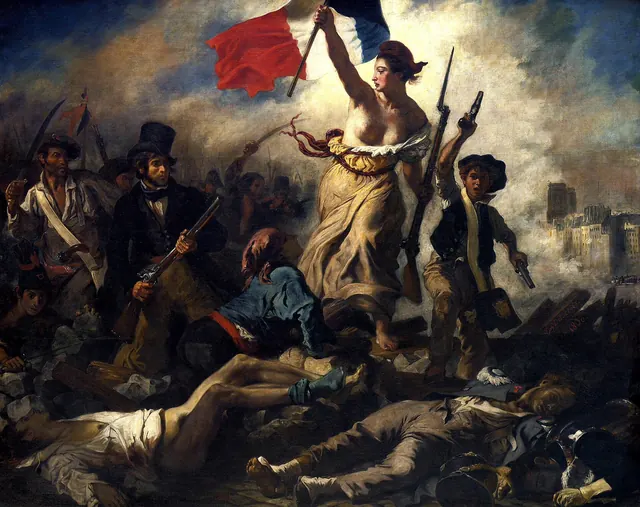
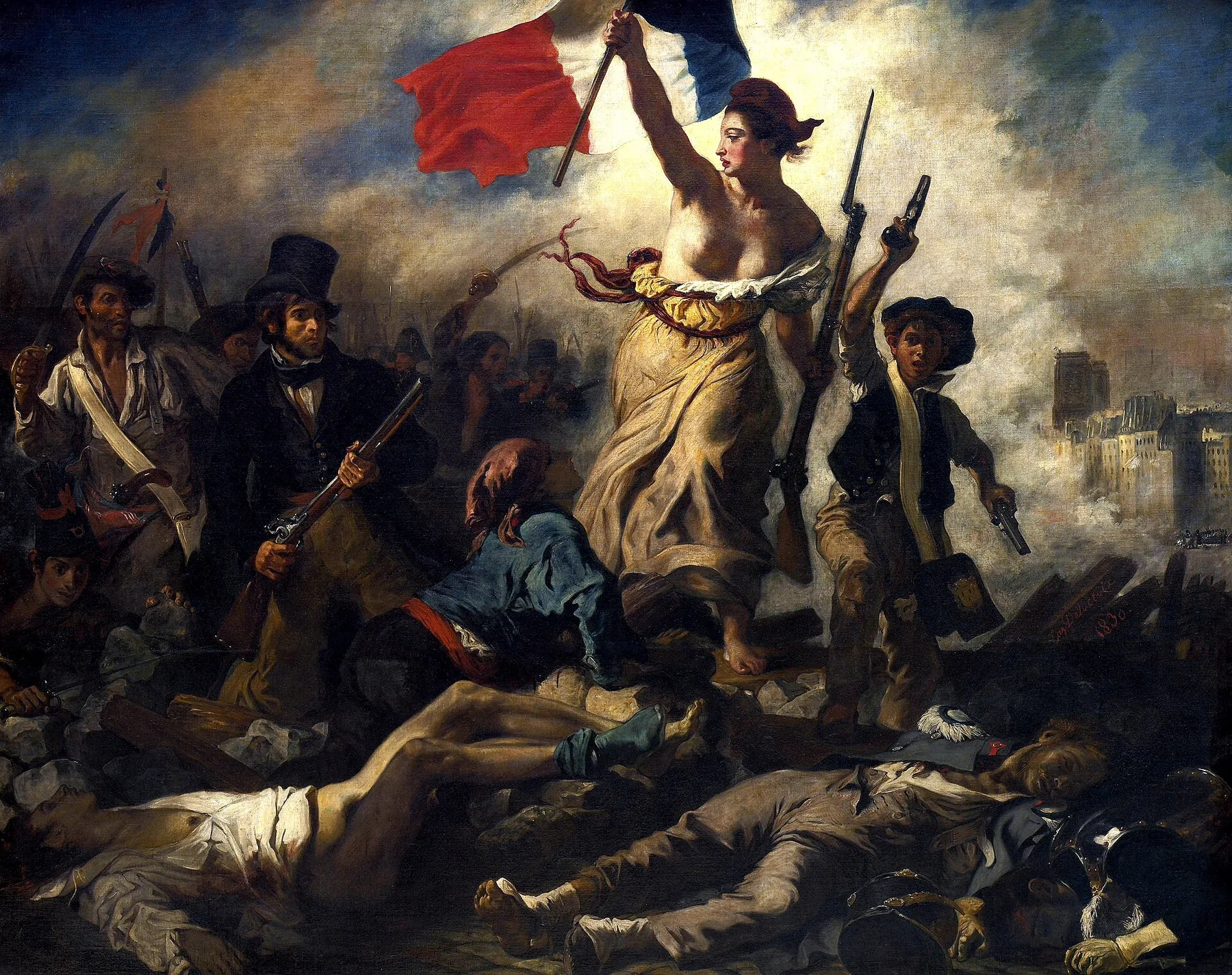
In July 1830 Paris erupted in a popular uprising that toppled King Charles X and ushered the constitutional monarch Louis‑Philippe onto the throne. Delacroix seized this dramatic turning point as the subject of his new canvas, intending the work to stand as a visual record of the July Revolution itself. By embedding the event within a single, sweeping image, he offered viewers a concrete memory of a moment when the old Bourbon order fell and a new, more liberal vision of France was proclaimed. This historical anchor gives the painting its urgent, commemorative purpose.
Delacroix worked with astonishing speed, completing the massive oil on canvas in just three months. The finished work was then presented to the public at the Salon of 1831, where it entered the official exhibition circuit of the French Academy. That rapid turnaround, from conception to public display, underscores how freshly the events of July 1830 were still resonating in the city’s imagination when the painting first opened its doors to viewers.
At the centre of the turmoil stands a half‑draped woman, her Phrygian cap a timeless emblem of freedom. She clutches the French tricolour in one hand and a musket in the other, her gaze fixed ahead as if urging the crowd forward. According to contemporary sources, Delacroix did not intend her to be a literal portrait of any individual; rather, she embodies an abstract force of liberty that can arise from any people at any time. This duality—both specific and universal—gives the figure a powerful, almost mythic presence.
The crowd that surges behind Liberty is a cross‑section of Parisian society. To her left, a bourgeois gentleman in a top hat grips a hunting shotgun, his polished attire contrasting sharply with the street’s grit. Beside him, a muscular craftsman or factory worker brandishes a sabre, his stance reflecting the resolve of the working class. Further back, a student wearing the traditional faluche cap lifts pistols, representing youthful idealism and the university’s role in the uprising. This deliberate mix of social types underscores that the fight for liberty was a collective endeavour, not the preserve of any single group.
Delacroix slipped a personal touch into the scene. A young man wearing an opera hat can be identified as the artist himself, a subtle self‑portrait that places the creator within the very drama he depicts. On the left, the gentleman with the top hat is also thought to be a self‑representation, echoing Delacroix’s own experience as a member of the National Guard. While the claims do not specify battlefield service, his guard membership informs his intimate knowledge of the revolutionary atmosphere, adding a layer of personal involvement to the composition.
Rising through a clearing of smoke in the background, the spires of Notre‑Dame Cathedral loom, anchoring the chaotic street scene within a recognizable Parisian landmark. The cathedral’s presence reminds viewers that even the city’s most sacred institutions are caught up in the tide of change, suggesting that revolutions unfold within, not outside, the cultural fabric of a nation.
Delacroix organized the tumultuous tableau with a clear pyramidal structure: the apex is formed by Liberty’s outstretched arm and flag, drawing the eye upward and imposing order on the surrounding chaos. The overall palette is deliberately muted, tempering the scene’s frenzy. The canvas itself is monumental, measuring eight and a half feet by ten point six six feet (approximately 2.6 × 3.25 metres). Its sheer size forces the viewer to confront the drama at near‑life scale, as if standing amid the barricades themselves.
Delacroix’s daring use of colour—vivid reds, deep blues, and luminous yellows—did more than heighten the painting’s emotional intensity; it left a lasting imprint on the next generation of artists. Critics note that his chromatic choices directly influenced the emerging Impressionist and Modernist movements, whose painters sought to let pigment itself convey mood and atmosphere. In this way, the canvas serves as a bridge between Romantic drama and the later explorations of light and colour that would reshape modern art.
More than a century and a half after its debut, the image resurfaced in popular culture as the cover art for Coldplay’s 2008 album Viva La Vida. By placing Delacroix’s revolutionary scene on a contemporary record, the band tapped into the painting’s enduring themes of triumph, upheaval, and the fleeting nature of power, introducing the masterpiece to a new generation of listeners far beyond museum walls.
Through its vivid drama and timeless symbolism, Delacroix’s Liberty Leading the People continues to speak across centuries, reminding us that the quest for freedom is both a moment and a movement.