The story
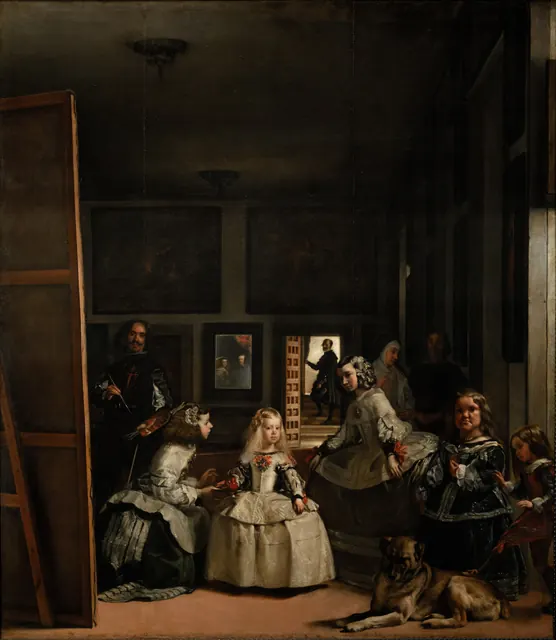
Diego Velázquez’s masterpiece, titled Las Meninas—also known as The Ladies‑in‑Waiting—introduces a quiet drama that unfolds within a richly detailed interior. Rendered in oil, the canvas captures a subtle modulation of light that seems to breathe across the figures, drawing the viewer’s eye from one corner to the next. The title itself shifts attention from the distant monarchs to the attendants, hinting that the work will play with perspective and observation, inviting us to wonder who is looking at whom.
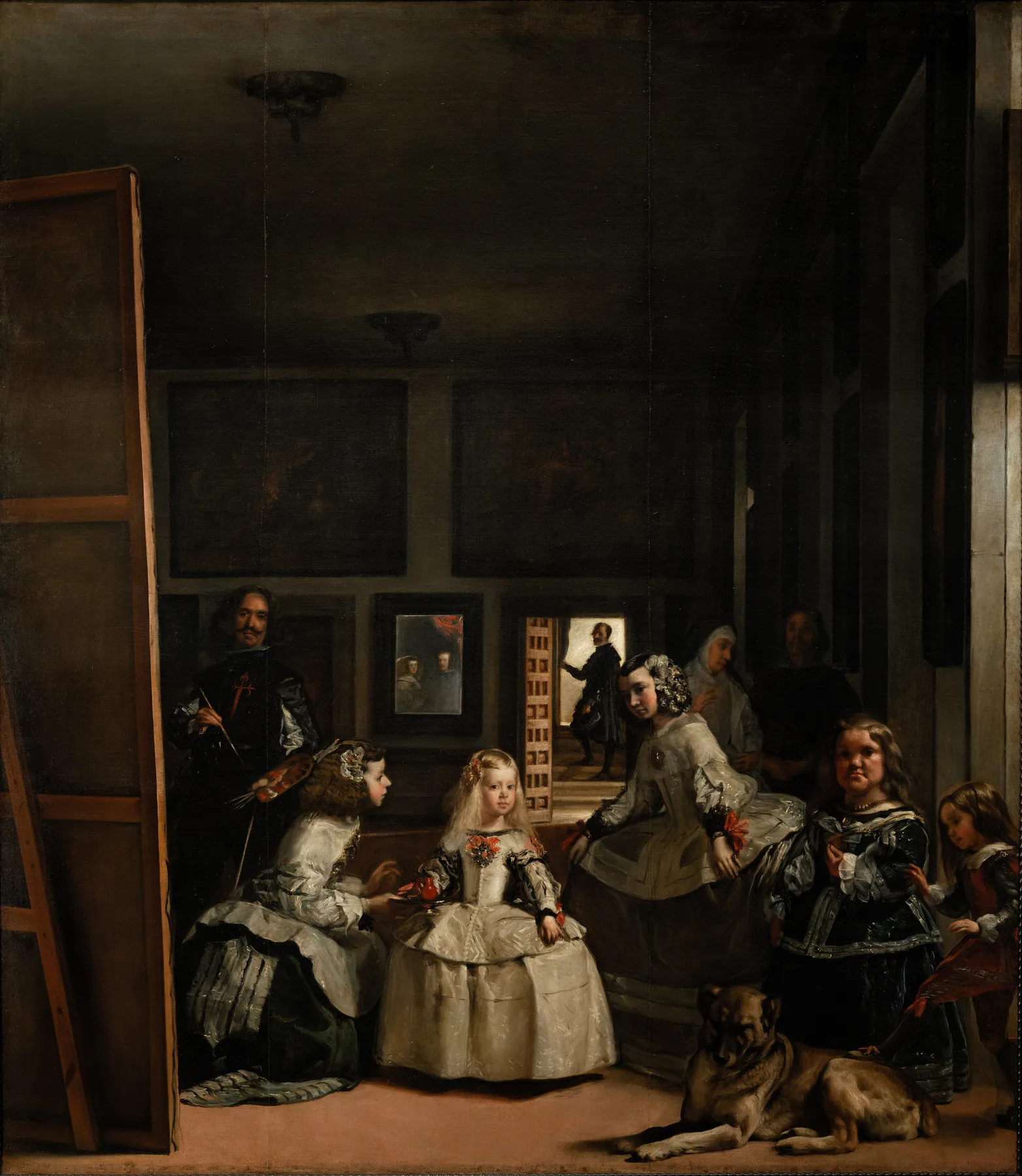
In 1656 Velázquez painted Las Meninas, an oil work that now belongs to the Museo del Prado in Madrid. The surface of the canvas bears a luminous depth, allowing flesh, silk and shadow to merge with a naturalistic grace that still captivates the eye. Velázquez’s long service to the royal court earned him the Order of Santiago, and the red cross of that order is clearly visible on his tunic, marking his elevated status among the court’s artists.
The focal point of the composition is the five‑year‑old Infanta Margarita Theresa, daughter of Philip IV and his second wife Maria Anna. She stands in the centre of the artist’s studio, her gaze directed toward an unseen observer beyond the picture plane. Around her, the meninas—her ladies‑in‑waiting—adjust their gowns and attend to the child, their bodies forming a gentle rhythm that guides the eye across the room. The painting thus presents the Infanta and her attendants within the very space where the artist works.
Velázquez places himself within the scene, brush and palette in hand, his gaze meeting ours as if to ask permission to record what we are witnessing. The red cross of the Order of Santiago is visible on his tunic, a badge of his knighthood, while contemporary accounts note that he possessed a key to the royal chamber—both symbols underscoring his privileged position at court and his intimate involvement in the depicted moment. He stands to the left of the canvas, his figure framed by the soft illumination that catches the edge of his coat, reinforcing the sense that the painter is both observer and participant.
The background of the room holds a large mirror that reflects the figures of King Philip IV and Queen Maria Anna, suggesting their presence just beyond the painted space. This reflected image extends the depth of the composition, allowing the viewer to sense a court gathering that stretches outside the immediate foreground, while also raising the question of who is truly looking at whom within the layered scene. It hangs on the far wall, catching the light that also falls on the Infanta, creating a visual dialogue between the reflected monarchs and the figures in the foreground.
Scholars interpret Las Meninas as a meditation on the nature of painting itself, a self‑referential tableau that turns the act of looking back onto the viewer. Its layered gazes, complex perspective and ambiguous narrative blur the boundaries between reality and representation, making the work both a court portrait and a philosophical inquiry into seeing and being seen. The viewer is drawn into the scene, invited to occupy the space of the unseen patron whose presence is felt through the intricate play of observation. Each figure seems to acknowledge an audience beyond the canvas, reinforcing the idea that the painting itself is a stage for visual exchange.
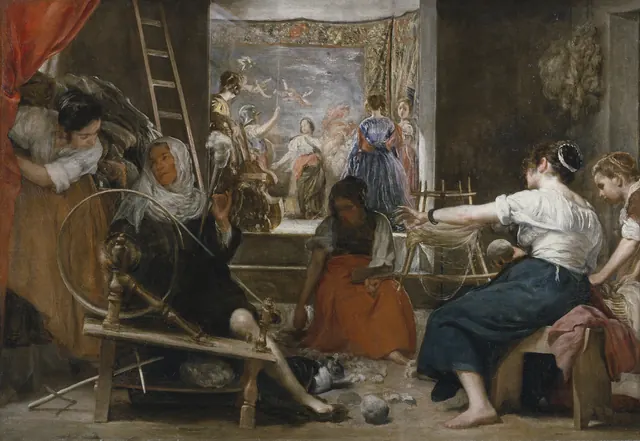
The composition also invites mythological reading: both of the classical myths invoked focus on the dangers of rivaling the gods in the creation of the arts. This framing suggests that Velázquez’s bold placement of himself alongside royalty, and his capture of the monarchs in a reflective surface, echo ancient warnings about artistic hubris, adding a subtle layer of symbolic tension to the visual drama. By recalling these myths, the painting engages the viewer in a timeless dialogue about the power and responsibility of the artist.
French Impressionist Édouard Manet was especially drawn to Velázquez’s brushwork, figures, and the interplay of light and shade in Las Meninas, and the painting has influenced later artists such as him. Its impact resonated throughout the nineteenth century, inspiring a generation of painters who saw in Velázquez’s handling of space and observation a model for modern experimentation. The work’s legacy endures as a touchstone for anyone probing the relationship between representation and perception. Through its complex composition, it continues to challenge and inspire artists to reconsider the act of seeing itself.
Las Meninas remains a masterful convergence of portraiture, narrative intrigue, and philosophical inquiry, inviting each new viewer to step into its layered world and contemplate the timeless dance of looking and being looked at.
Stay with us as we continue to uncover the stories hidden within art’s greatest masterpieces.